
Find Salinas Residents Record by Record
A useful Salinas residents directory search begins with the evidence already in hand. A full name points toward the Monterey Superior Court public portal, state business and license systems, or a library index. A street address belongs first in the Monterey County Parcel Report App because the county assessor's Internet roll is keyed to a Fee Parcel Number or Assessment Number rather than an owner name or street address. A past household calls for Polk directories, census schedules, Great Registers, newspapers, and probate. Each source answers a narrow question, so the result should keep the record date, address type, and party role beside the name.
The official trail can show an assessed owner, a recorded party, a registered voter who checks their own status, a named business participant, or a person listed in a dated directory. It does not create a complete household list. Names may be absent because a person is not a property owner, a voter record is restricted, a case is sealed, or a library volume has a gap. For a focused missing record, the California Public Records Act gives a route to an identifiable, nonexempt city or county record, but it does not require an agency to make a new resident list.
- Write down the exact name, address, date, and reason for the search.
- Use the county GIS address search for an address and save the APN before opening the assessor roll.
- Match a person or parcel to the county recorder, court, voter, business, or license source that fits the question.
- Use the John Steinbeck Library for historical directories, yearbooks, census copies, newspapers, or Great Registers.
- Ask the custodian for a copy or CPRA response when the online index stops short.
The Salinas street directory follows the address chain in more detail, including the county map, parcel number, deed index, and address-linked city records.
Offices Behind the Salinas Resident Directory
Salinas is Monterey County's seat, so several record trails meet at offices on West Alisal Street. For a Salinas residents directory question, start with the custodian that made the record. The Assessor describes property status and assessed ownership. The Recorder indexes deeds and other instruments, and the combined Assessor-County Clerk-Recorder handles county vital certificates and clerk filings. Elections holds registration data under strict use rules. The court keeps case indexes and copy procedures. The City Clerk and Permit Center add municipal records keyed to an address.
Monterey County Recorder
168 W. Alisal Street, First Floor, Salinas, CA 93901
(831) 755-5041
Monterey County Assessor
Parcel ownership, status, values, exemptions, and characteristics
(831) 755-5035
Monterey County Elections
Self-service voter status and approved voter-file requests
(831) 796-1499
Monterey Superior Court
Party, case, filing-date, probate, and criminal index access
Salinas courthouse records desk
City records follow a different route. The Salinas public-records request page covers identifiable city records, while the Permit Center handles building, planning, code, and development files. The library is a research partner, not the official repository for City of Salinas administrative documents.
Why Salinas Has No Single Resident List
California records are split by purpose. A parcel roll is built for assessment. A deed index records an instrument. A court register shows a case event. A voter service authenticates one voter's own status. A city permit identifies project activity. A historical directory captures a household at the time of publication. That split is why a Salinas residents directory must label dates, roles, and address types instead of merging every result.
| Official roll or index | What the custodian created for its own function, such as a parcel, deed, case, license, or voter record. |
|---|---|
| Resident directory | A practical group of sources that may show owners, parties, householders, or historical residents, with different dates and limits. |
| Address evidence | A situs, mailing, legal, business, or postal address. The label must stay with the result. |
| Current occupancy | An inference that official property and historical sources cannot prove on their own. |
Official rolls are slower than commercial profile pages, but they show the source office and the record's role. Commercial profiles may be useful as a lead, yet stale addresses, merged names, and copied data can make a neat result less reliable than a dated county or library record. The safest comparison is official evidence for confirmation and a commercial result, if used at all, only as an unverified clue.
Keep the context. A name match is not enough. Save the date, custodian, party role, and type of address before treating a Salinas record as part of a resident trail.
The California My Voter Status service illustrates the limit. It asks the voter for identifying information and returns that voter's own status and election details. It is not a reverse-address resident directory.
The official self-service lookup form makes that distinction visible.
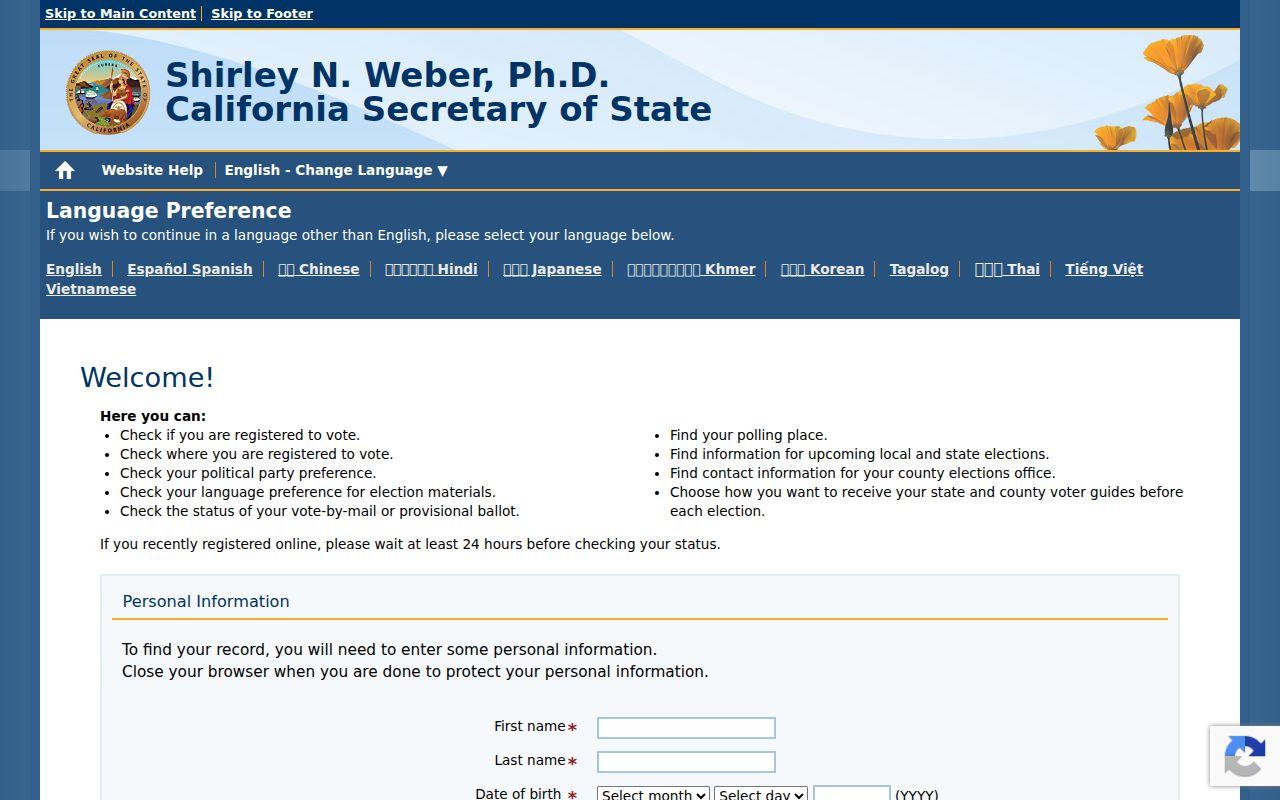
The California form is a self-check. A broader Monterey voter-file request needs an application, identification, intended use, geographic scope, security details, and a permitted purpose under Elections Code section 2194.
Turn a Salinas Address Into an APN
Address work starts with geography, not a name search. Open the Monterey County Parcel Report App, enter the complete address in Find address or place, and select the matching result. Note the Assessor's Parcel Number, then use the parcel number in the assessor's Fee Parcel or Assessment search. The map can search APN and APN_FORMAT, but its text results are limited to six suggestions, so a precise address or parcel key works best.
The APN is the bridge. It ties the map to the assessment roll, the legal description in a deed, a parcel report, and a city permit request. A Salinas residents directory built from an address still needs that bridge. It does not turn every person connected to a parcel into an occupant. The assessed owner may be a trust, entity, co-owner, or someone who receives mail elsewhere. A different mailing address can suggest a non-occupying owner, while an owner-occupancy exemption is only supporting evidence.
Use this record flow: address to parcel map, parcel map to APN, APN to assessor result, current owner to recorder grantee search, prior seller to the next deed. Compare the legal description, recording date, and document number at each step. A street name alone is not a substitute for the lot, block, tract, map book, or page that controls a title chain.
For a broader address set, pan the GIS map and use its selection tools rather than expecting one street text query to return every parcel. The full parcel-by-street walkthrough belongs on the street directory page, while the home workflow keeps the key rule in view: Monterey's public Internet assessment search is APN-first.
Salinas Property Inquiry Fields
The county's online Property Inquiry is more precise than its name suggests. It is not an unrestricted owner-name or street-address lookup. Select the search key, enter the parcel or assessment number, and inspect the result tabs. California Government Code section 6254.21 is the reason Monterey describes the Internet roll as unavailable for owner-name and address searching. Use the parcel map or an assessor counter request when the APN is not known.
| Field | Type | Required | What the search accepts |
|---|---|---|---|
| Search By | Dropdown | Yes | Fee Parcel Number or Assessment |
| Parcel or Assessment number | Text | Yes | Twelve digits, or a partial value with a six-digit minimum; no spaces or punctuation |
| Property Information | Result tab | No | Ownership, parcel status, property address, and map context where available |
| Roll Value | Result tab | No | Tax-rate area, assessed values, exemptions, and parcel characteristics |
| Value Notice | Printable result | When applicable | Proposition 8 assessment notice |
Assessor characteristics are maintained for assessment purposes and are not continuously updated. A screen print costs $2 under the researched 2026 schedule; a residential property-characteristics report is listed at $24. Counter service at 168 West Alisal Street is the practical fallback when a web result omits mailing information or the parcel needs human review.
- Parcel
- A mapped unit of land identified by an APN for assessment and geographic work.
- Situs address
- The physical location of the parcel, distinct from a mailing destination.
- Legal description
- The lot, block, tract, map, or other wording used to identify land in a recorded instrument.
- Index
- A finding aid that points to a record; it is not always the record image or a certified copy.
Current Salinas Resident Directory Sources
Current directory work is a matching task. The Salinas residents directory is most useful when each source is read for its own purpose. Property records are strongest for an assessed owner. A deed is strongest for a recorded party and conveyance. A court search is strongest for a dated case event. A state license or business filing shows an affiliation. A voter status result belongs to the voter who authenticates.
| Source | Useful evidence | Keeper | Access boundary |
|---|---|---|---|
| Parcel and assessment record | Assessed owner, situs, values, exemptions, parcel status | Monterey County Assessor | APN or assessment search; fuller products at the counter |
| Recorded-document index | Grantor, grantee, instrument type, date, number, legal description | Monterey County Recorder | 1978 to present current index; 1850 to 1977 historical index |
| Court case index | Party, case number, filing date, type, and status | Monterey Superior Court | Public portal, courthouse computers, mail or counter copies |
| Business or license record | Entity, agent, officer, license status, dates, discipline where public | California SOS or DCA | Affiliation or professional record, not residence proof |
| Historical directory | Householder, spouse notation, occupation, address, school or newspaper link | John Steinbeck Library | Reference desk, Local History, Business Reference, and microform |
For a one-person question, the evidence table is more useful than a broad name list. The Salinas resident lookup page keeps the court, vital, license, business, and historical verification paths together.
Monterey Court Party Searches
The Monterey Superior Court public portal supports Case, Party, Business, Filing Date, and Criminal Advanced modes. Party search uses First Name and Last Name. Filing-date search adds a date range and courthouse. Criminal Advanced can use last name, first name, and date of birth, or a DA number, or a report or booking number with a date. A result gives the case number, case name, filing date, type, and status. A match still needs party-role and case-detail review.
Case record. Case number, name, filing date, case type, and status. Party search. First name and last name, then the same result columns and a case-detail link.
Criminal advanced. Name plus date of birth, DA number, or report and booking number with date. Copy fallback. Form CR-109 asks for requester contact, case caption, document description, certification, and delivery details.
The Monterey advanced search is useful for separating namesakes. Public courthouse computers and nonelectronic indexes remain available under the court's access instructions. Form CR-109 lists $15 for a name or search over ten minutes, $0.50 per page, $40 certification, and $10 off-site retrieval. The court says a check may be marked “Not to exceed $75.00” when the exact total is not known.
The portal screen is a finding aid, not a full case file.
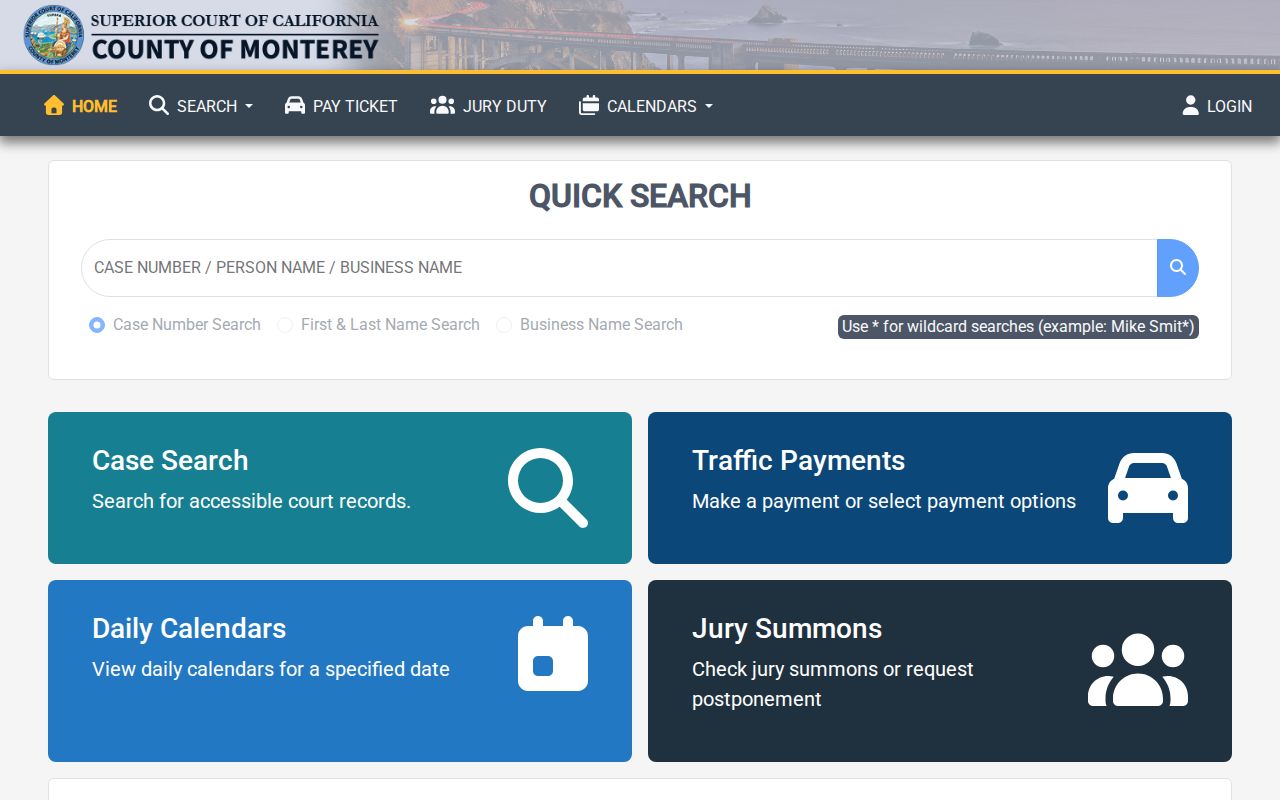
Sealed, juvenile, adoption, and confidential family material is outside the public trail. A booking or charge also needs a court disposition before it is treated as a case outcome.
Salinas Vital Records: Index or Proof?
Vital records answer life-event questions, but an index entry and a certified certificate are not the same thing. The Monterey Recorder-Clerk issues Monterey County birth, death, and non-confidential marriage certificates. The Health Department handles recent births and deaths and burial permits, while California Department of Public Health Vital Records is the statewide channel. A historical index, obituary, cemetery transcription, or newspaper abstract may help locate an event without giving the requester a certified document.
California Health and Safety Code sections 103525 and 103526 distinguish authorized certified copies from informational certified copies. An authorized copy can be used for identity when the requester fits an allowed relationship or has court authorization. A mailed authorized request needs a notarized sworn statement. Confidential marriage copies are controlled separately under Family Code section 509. California does not use one simple “open after a set number of years” rule for ordinary certificates.
Did a Salinas event occur? Use library indexes, newspaper abstracts, cemetery records, or the issuing office; finding evidence may not prove identity. Who may receive a certificate? Use the County Recorder-Clerk or CDPH application; relationship, declaration, payment, and notary rules apply. What happened in a divorce? Use the Monterey Superior Court file or decree; CDPH's certificate of record is not the decree.
The 2026 county schedule in the research lists birth certificates at $31, death certificates at $26, and marriage certificates at $19. Check the issuing office before sending payment because fees and forms can change.
The John Steinbeck Library's People Indexes
The John Steinbeck Library is the strongest historical shelf in a Salinas residents directory search. Its Local History and Business Reference collections are mainly in-library or microform, so a researcher should contact the Reference Desk before making a trip. The library is at 350 Lincoln Avenue, Salinas, California 93901, and its phone is (831) 758-7311. The library's Directories and Census inventory is the best place to confirm a title, call number, and physical format.
The documented run starts with L. L. McKenney's 1884 Coast County City Directory and an 1889 Monterey County adult-resident directory. Polk editions include Salinas and regional volumes in 1926, 1928, 1930, 1933, 1937, 1939, 1941, 1946, 1949, 1952, 1953 through 1959, 1969, and Salinas Valley issues from 1971 through the 1990s. Great Registers, census microfilm, yearbooks, newspaper abstracts, hospital admissions, cemetery transcriptions, and the California Death Index extend the shelf.
The John Steinbeck Library collection page shows the local-history entry point.
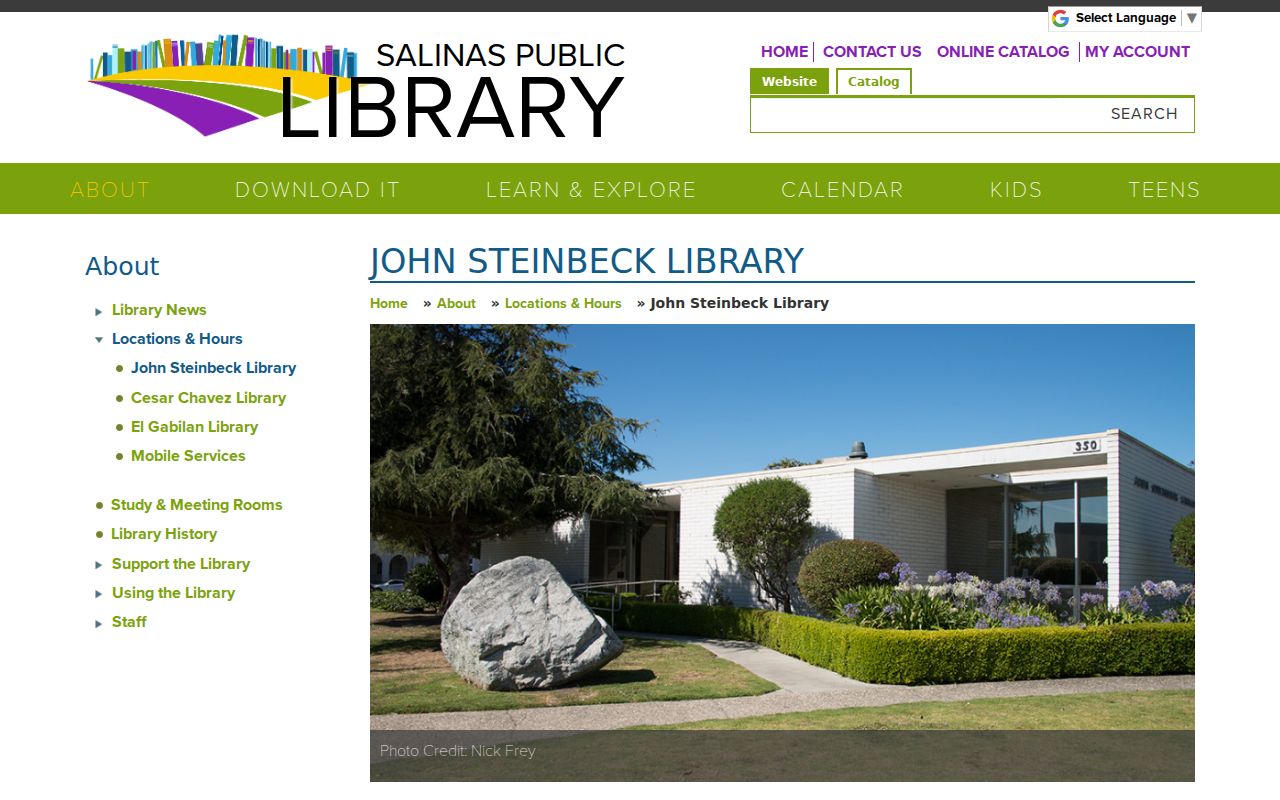
Ask staff which Polk edition contains a reverse or criss-cross street section. The library catalog lists the volumes but does not promise that every year has an address-first section. The library's 1900 through 1944 Great Register microfilm sits on three identified reels, and the 1890 surname edition helps bridge the mostly destroyed federal census.
- Criss-cross directory
- An address-first or street section that can identify a listed householder, then send the researcher back to an alphabetic entry.
- Great Register
- A historical voter register that can add locality and identity detail for its year, not a modern open voter roster.
- Microform
- A film copy of a printed or archival source that is read with library equipment.
- Index
- A name or event finding aid that points to a source and may not contain the full record.
Salinas Heir Trails From Public Records
An heir search should begin with a dated death clue, not an unverified current address. Library newspaper abstracts, the California Death Index for 1940 through 1988, cemetery transcriptions, and a county death certificate can anchor the person. From there, the Monterey court portal and probate records may identify a decedent, petition, estate, or interested person. A deed chain can show how land was distributed, while the California State Controller's unclaimed-property search offers a separate name and holder clue with a claim process of its own.
Monterey County Historical Society's archival vault is another bridge when a modern index is thin. Its holdings include early assessment rolls, grantor records, Great Registers, poll lists, judgments, dockets, jail registers, marriages, probate bonds and wills, lot books, maps, diaries, and club records. It reports more than 5,000 photographs and 2,500 negatives. Archival research is by appointment, so the vault is a custodian-led research path rather than a walk-in searchable directory.
Preserve the relationship named in each source. An heir, petitioner, grantee, trustee, or executor is not automatically the current resident of a Salinas parcel. Probate and deed records are strongest when paired with a legal description and a date.
The California unclaimed-property index may answer a different public question.
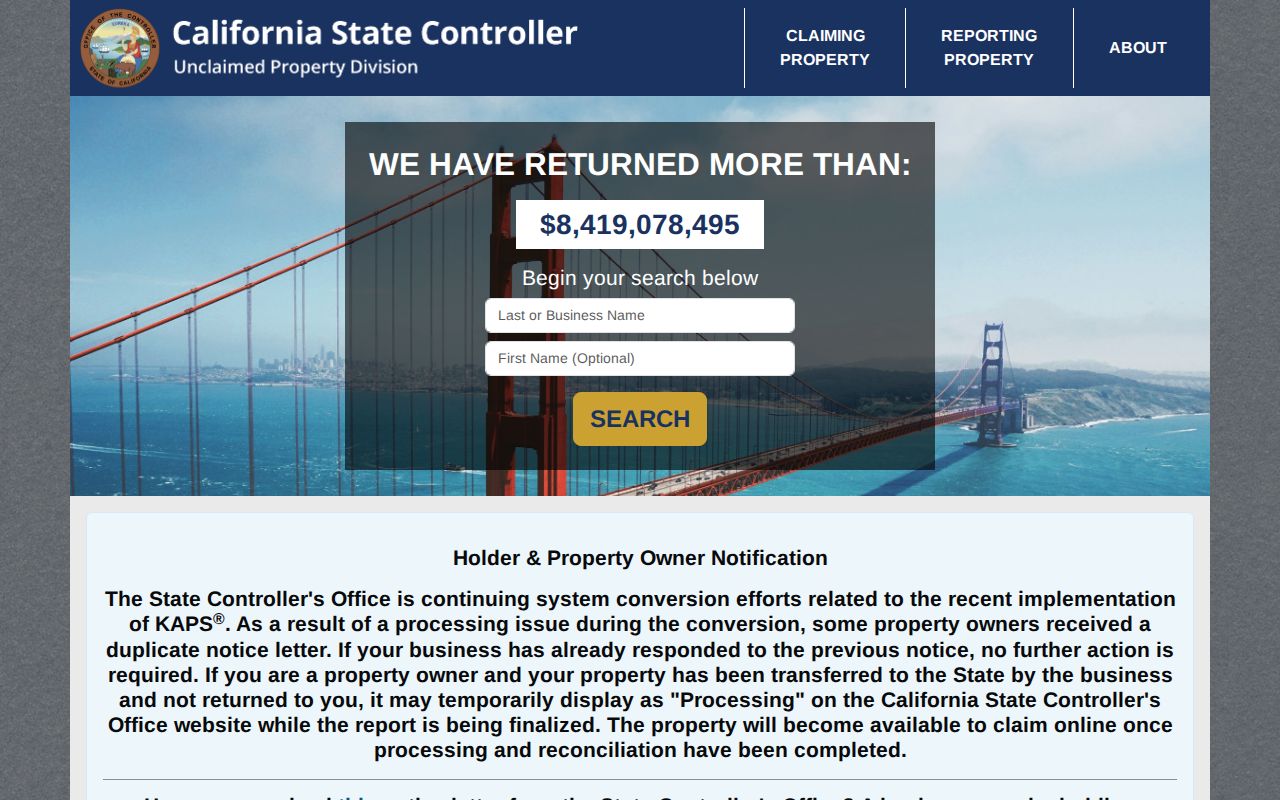
An unclaimed-property name match is a lead for a claim, not proof of kinship or current residence. Use the Controller's instructions and the underlying custodian records.
Salinas Business and License Records
Some Salinas resident searches are really affiliation searches. California bizfile Online can show an entity name or number, status, addresses, agent, officers, managers, and filings. Monterey County fictitious-business-name filings connect a trade name to a registrant and business address. The Department of Consumer Affairs search adds board, license type, name, number, city or county, status, dates, and public discipline. These sources can locate a professional or business contact without claiming that a business address is a home.
The official California professional-license search is a useful first stop for a dated license record.
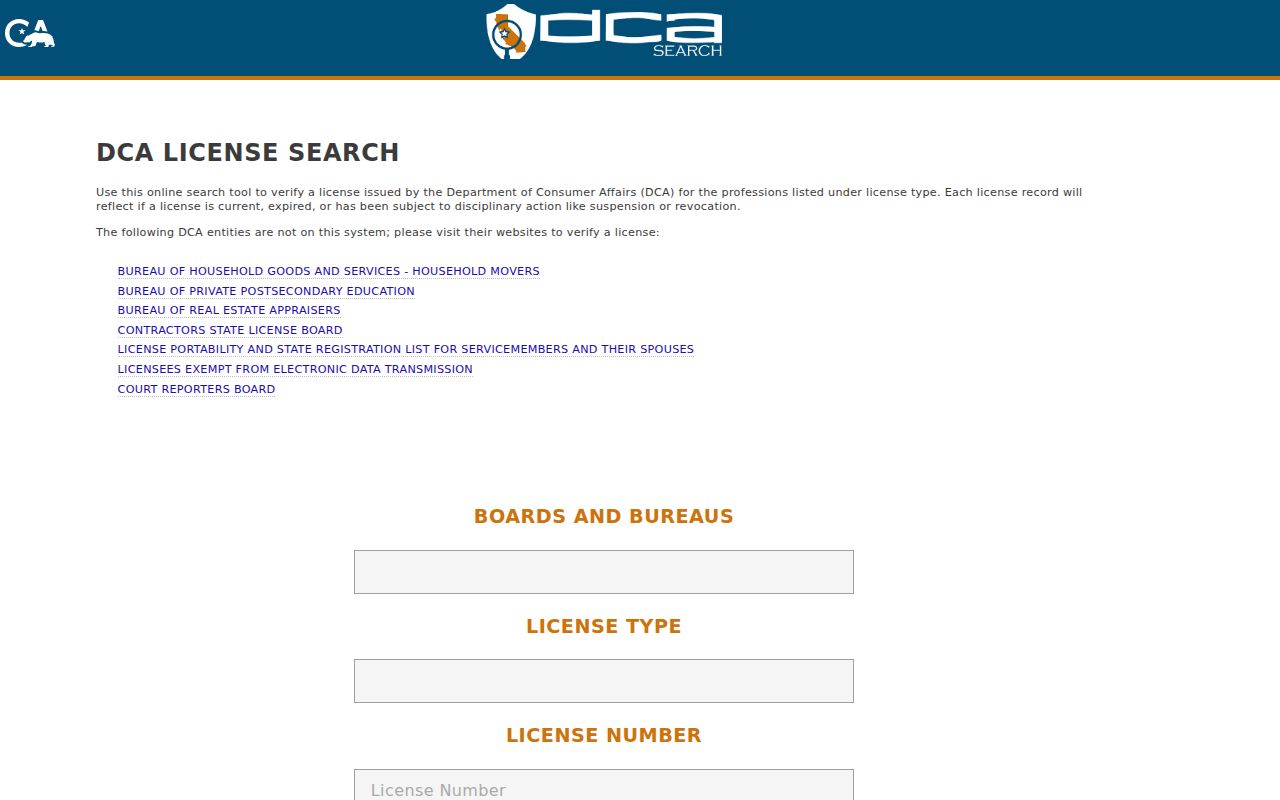
The result identifies a license relationship and its public status. It does not settle a namesake issue, a home address, or the person's present location.
California's business entity search provides a different kind of affiliation record.
Compare filing dates, agent roles, and business addresses. An agent may be counsel, a service company, or a mailing contact. Read the filing instead of treating every name on it as an owner or resident.
Safety Registries and Salinas Record Limits
Public safety and law-enforcement sources carry their own rules. California's Megan's Law site supports name, address, and map searches under Penal Code section 290.46, with warnings about unlawful use. The Monterey County Sheriff inmate search and the state CDCR locator are custody tools, not general resident lists. A booking or charge is not a conviction, and any court disposition must be checked separately.
The state registry's search surface is clear about the kind of result offered.
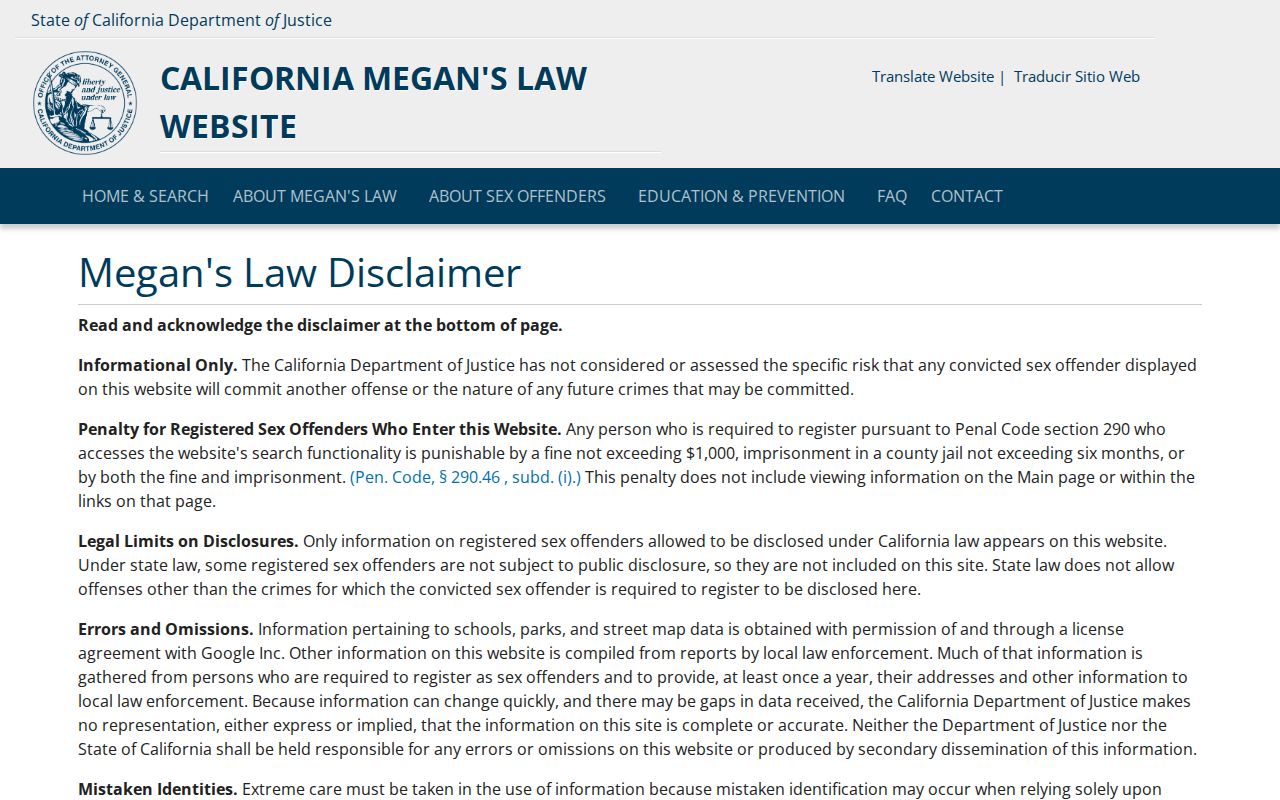
Use a registry only for its stated lawful purpose. Do not publish a person's location, contact details, or record in a way that causes unwanted contact or harm.
Lawful personal use. Public records can support family history, estate work, civic research, or a careful effort to reconnect. Never use a Salinas resident record to stalk, harass, threaten, impersonate, or defeat a confidentiality protection.
Historical Salinas Resident Directories
The historical Salinas resident directories preserve a city that was larger on paper than today's boundary. A Salinas residents directory that reaches backward must account for McKenney's 1884 volume, the 1889 adult-resident directory, and the intermittent Polk run through 1997 across rural routes and neighboring valley communities. A directory entry can supply a householder, spouse notation, occupation, or address for its publication date. It cannot prove that a person stayed there between issues.
Salinas history also changes the record geography. The first annexation brought 52 acres along Romie Lane in 1933. Forty-three additions from 1950 through 1956 doubled the city's area, and Alisal's union with the city in 1963 nearly doubled the population to about 50,000. A family listed on a rural route or in Alisal may appear under a different city label later without a move. Pair directories with maps, deeds, census schedules, newspapers, and the parcel record.
The Salinas city directory collections page follows the library shelf, entry conventions, and household tracing method in full.
Salinas Privacy Boundaries and Fallbacks
Some breaks in a Salinas record trail are intentional. Safe at Home can provide a substitute mailing address for eligible survivors and certain reproductive-health participants. Confidential voter registration, sealed court files, adoption records, protected DMV information, utility data, and unlisted household members are not open parts of a resident directory. The absence of a name is not proof that a person is absent from the community.
When an online index ends, use the correct fallback: a recorder counter terminal or bound book, an assessor screen print or report, a courthouse public computer, a library reference appointment, the Historical Society vault, or a focused CPRA request. The request should name the record, date range, address or parcel, and preferred format. A custodian may redact exempt material or say that no responsive record exists.
California's Safe at Home information is available from the Secretary of State program. Respecting that program is part of accurate research, not an obstacle to work around. A good Salinas residents directory trail ends where the law and the record custodian say it ends.