
Salinas City Directory Years and Shelves
The strongest Salinas city directory source is the John Steinbeck Library's official Directories and Census inventory. It names the title, compiler or publisher, year, call number, and format. Most volumes are reference or microform resources, so the first task is to confirm that the needed issue is held and then ask staff which section it contains.
| Collection | Years documented | Where held | Access |
|---|---|---|---|
| Coast County City Directory | 1884 | John Steinbeck Library, R917.9476 Coa | Local History and microform |
| Monterey County adult-resident directory | 1889 | Local History, R917.9476 Mon | Reference use |
| Polk Salinas and regional directories | 1926, 1928, 1930, 1933, 1937, 1939, 1941 | Microform and Business Reference | In-library |
| Polk Salinas City Directory | 1946, 1949, 1952, 1953 through 1959, 1969 | Business Reference and microform | In-library |
| Polk Salinas Valley | 1971, 1975 through 1977, 1979 through 1997 issues | Business collection, R979.9476 M | Issue-by-issue |
The collection table is a starting map, not a promise that every volume is digitized. The library site expressly points researchers to Local History or Business Reference, and the Reference Desk can confirm schools, years, and retrieval details.
Salinas's 1884 City Directory
The documented local run begins with L. L. McKenney's 1884 Coast County City Directory. The 1889 Monterey County directory follows with adult residents arranged by township. These early volumes matter because they sit before the surviving Polk run and can anchor a family or address in the county's first directory era. The name, township, and printed address should be copied exactly before modern place names are added.
A directory entry is evidence from a publication date. It can suggest a household, but it does not prove a person remained at that address, owned the property, or appeared in every missing year. Deeds, Great Registers, census schedules, newspaper notices, and probate records can test the clue.
The library's map and local-history holdings help place an early entry.
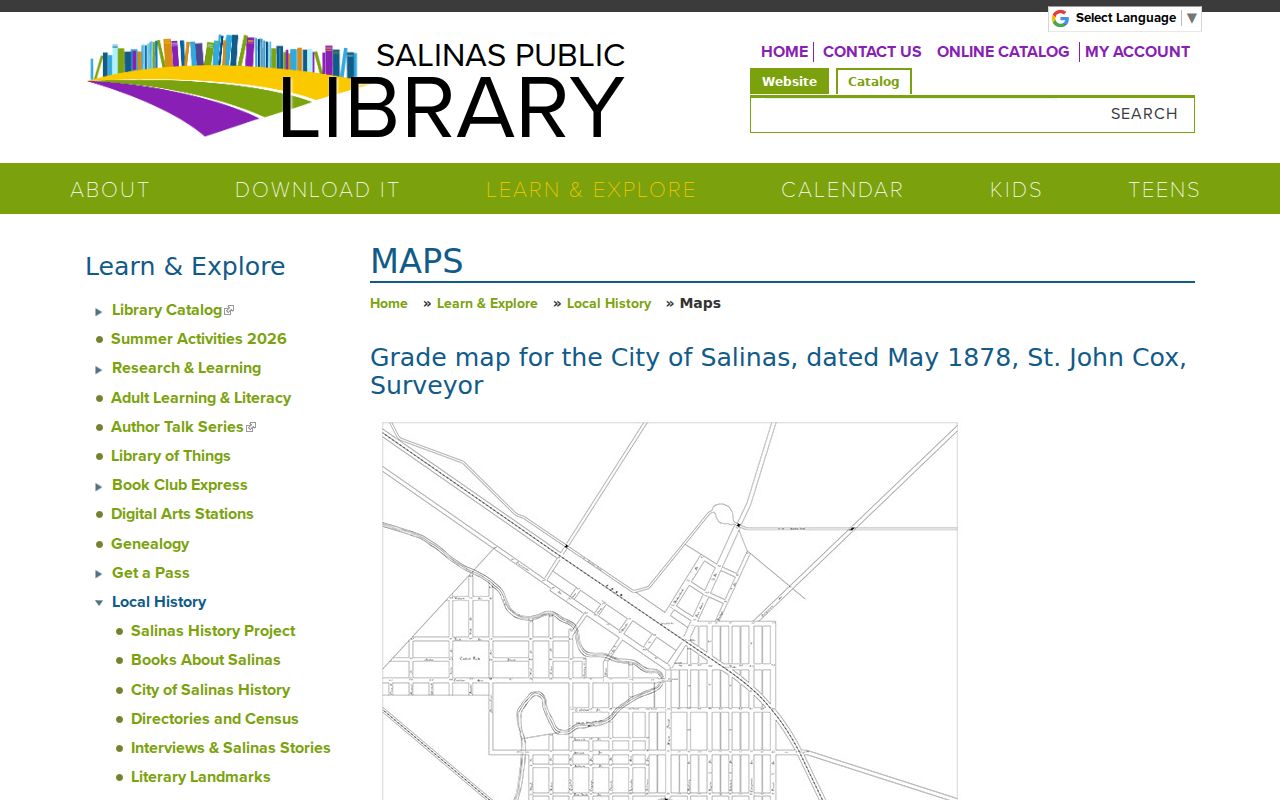
The map collection supplies historical geography around a name. It should be read with the directory volume, not as a substitute for a printed resident entry.
The Polk Salinas Directory Run
Polk volumes change scope by issue. The 1926 edition includes Carmel, Carmel Highlands, Castroville, Chualar, Del Monte, Gonzales, King City, Lakeside, Pebble Beach, Soledad, and Spreckels. The 1928 volume adds Seaside and describes Carmel Rural Route No. 1. The 1937 issue reaches Aromas, Big Sur, Greenfield, Marina, and Moss Landing. The 1939 book includes Salinas, Monterey, Carmel rural routes, Big Sur Star Route, and Jamesburg Star Route.
That regional spread is a key Salinas city directory warning. A person remembered as a Salinas resident may have been listed on a rural route or in a nearby valley community. Keep the original locality in the research note. Translate it to a current ZIP or jurisdiction only after using maps, deeds, or parcel data to make the bridge.
The Polk holdings inventory shows one part of the local collections that can supplement the physical shelf.
The digitized-library partner page shows another part of the local collections that can supplement the physical shelf.
Digital community-memory material can help with discovery, while the library inventory remains the authority for the dated directory holdings and in-library format.
Read a Salinas City Directory Entry
Begin with the alphabetic residents section. Copy the printed name, middle initial, spouse notation, occupation, and residence address. Then look for a street or householder section. Common Polk marks include “h” for householder or home, “r” for resides or rooms, “emp” for employed, and “wid” for widow, but the selected volume's key controls. Do not expand an abbreviation when the volume does not support the reading.
| Printed name | Spelling, initials, suffixes, and any name variant in the selected issue. |
|---|---|
| Household clue | Spouse notation or a relationship mark, recorded only as the volume prints it. |
| Occupation | A description of the work or trade tied to that year, not a current identity claim. |
| Residence | Street or rural-route wording for the publication date. |
| Reverse entry | A street-first listing, when the issue contains a criss-cross or householder section. |
- Householder index
- An address-first section that points to the listed household or principal name at a location.
- Criss-cross directory
- A reverse street arrangement that lets an address lead back to an alphabetic entry.
- Abbreviation key
- The volume's own list of marks and short forms; it should be checked before interpreting an entry.
No public scanned Salinas Polk entry was available for direct inspection in the research. Treat the standard fields above as a research aid, then verify the actual convention in the selected physical volume.
Salinas City Directory Routes
A street-first section changes how a city directory can answer a house-history question. Enter the address as printed, read the listed householder or business, and then return to the alphabetic section for more context. This can connect a past occupant to a deed, census, obituary, or permit without forcing a modern address format onto an older one. The Census release schedule helps set the right expectation for later federal household records.
Rural-route language deserves the same care. Polk titles include Salinas post-office rural routes and broader Salinas Valley coverage. A route label may have carried a Salinas postal identity while sitting outside today's city boundary. The old wording is part of the evidence, not a typo to erase.
The Polk shelf is a time series with gaps, not a smooth annual list. Search the closest prior and next issues and mark every gap instead of assuming a move.
Use Salinas City Directories for Family History
A family-history search gains strength when each directory entry is paired with an independent dated source. The aim is not to collect names alone. It is to show how a household, address, work description, or relationship changes across known points in time.
- Write the exact name, address, spouse mark, occupation, and volume year from the first useful entry.
- Check the closest earlier and later directory issues, preserving spelling and rural-route wording.
- Pair each entry with the nearest available federal census, state census, Great Register, newspaper, or deed.
- Use the street section or parcel map to test whether the address and building line up.
- For a death or estate clue, move to the newspaper, cemetery, probate, and court records while keeping the directory as the dated household anchor.
The current address chain belongs to the Salinas street directory. Historical volumes answer the earlier household question; the county parcel and recorder systems answer what happened to land later.
Salinas Directories Fill the 1890 Gap
The mostly destroyed 1890 federal census leaves a well-known gap. The John Steinbeck Library holds a 1870 Great Register clipping, an alphabetized 1890 Monterey Great Register, and Great Register microfilm from 1900 through 1944 on three reels: 1900 through 1926, 1928 through 1938, and 1940 through 1944. These registers can add a name, locality, and historical identity detail for a particular period.
They are not interchangeable with a modern open voter roster. Use them as a dated historical source beside a dated directory, census, deed, or newspaper. The combination can separate namesakes and explain why a household appears in one volume but not in another.
Salinas Directory Companions
Yearbooks extend a directory into school and community life. The John Steinbeck Library has extensive local school yearbooks, with exact schools and years supplied by Reference staff. The newspaper collection is mainly microfilm, with readers and printers available. Salinas Weekly Index and Salinas Californian abstracts from 1873 through 1882 cover births, marriages, deaths, and naturalizations, making them valuable before modern statewide registration.
The newspaper continuation charts show how title changes can interrupt a simple search for a family name.

A newspaper clue can bridge a directory gap, but it should retain the printed date and page or abstract reference so another researcher can check it.
Salinas Directory Maps and Buildings
Sanborn fire-insurance maps do not name residents, but they show the structure that an address describes. The Library of Congress holds Salinas sets for August 1886, March 1892, April 1900, and January 1913. Building footprints, materials, uses, streets, rear structures, and changed numbering can explain why a directory entry seems to move or why two descriptions refer to one lot.
Sanborn maps and printed directories answer different questions. The map describes the building. The directory identifies a listed person or business. A deed and parcel map then test whether the structure sits on the same legal land.
The digitized 1913 Salinas Sanborn map supplies the building comparison, while the Monterey County Historical Society archival vault supplies the people and county-record context.
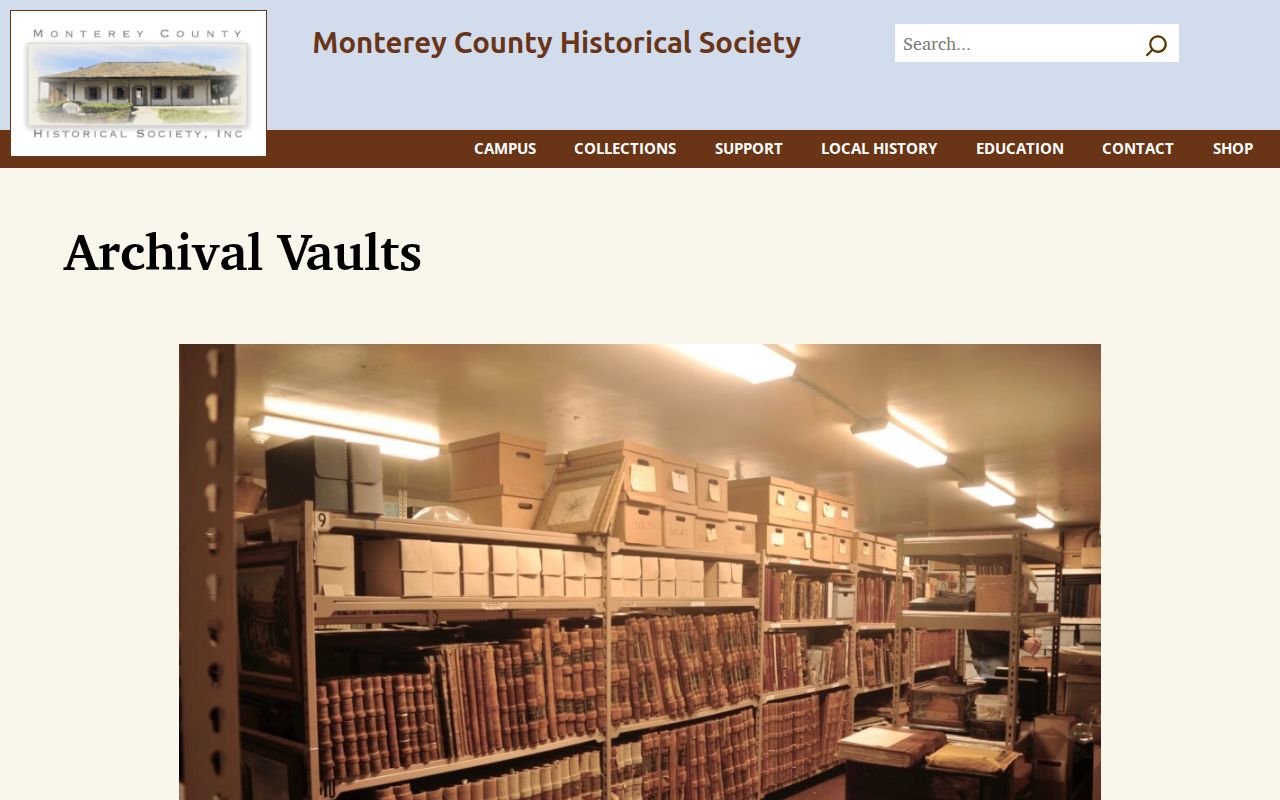
The archival view adds context around the public record trail. It does not turn a map footprint or photograph into proof of a named occupant.
Salinas City Directory Research
Plan a library session around the exact question. Bring a name variant, a date range, an old address, and the nearest known community. Ask the Reference Desk whether the needed Polk issue is in Business Reference, Local History, or microform. Confirm whether the volume has a street-first section before spending time on an address search. Request school and yearbook coverage by school name and year.
Library staff can also point to maps, local newspaper charts, census copies, Great Registers, the hospital admission census from January 1886 through February 1917, cemetery transcriptions, and the California Death Index microfilm from 1940 through 1988. These sources are especially useful when a directory gap looks like a move but may instead reflect a missing issue or a change in regional scope.
The historical society is a separate appointment path. Its Robert B. Johnston Archival Vault holds early county assessment, deed, court, probate, poll, and lot records, plus private collections. It reports more than 5,000 photographs and 2,500 negatives. The California State Archives offers another state-level historical access route. Use the library for the directory shelf and the Historical Society for archival bridges.
Salinas City Directory Limits
The library's inventory contains an apparent “1885 June” entry amid later 1990s issues. Treat it as a catalog transcription issue until staff verify the physical volume. No public scanned Polk entry was inspected for this assignment, so exact printed marks should be confirmed in the selected issue. These small cautions protect a directory search from turning a catalog line or standard abbreviation into a false fact.
A directory is a snapshot. It may omit children, household members, people who did not answer the publisher's process, or places outside the issue's coverage. Pair the entry with a dated official record and keep the result tied to the named year. For a present-day person, a directory needs a modern independent source before it becomes more than historical context.