
Find Salinas Residents Record by Record
Start with the evidence in hand. A full name can point toward the Monterey Superior Court public portal. It can also point to state business and license systems, or a library index. A street address belongs first in the Monterey County Parcel Report App. The assessor's Internet roll is keyed to a Fee Parcel Number or Assessment Number rather than an owner name or street. A past household calls for Polk directories, census schedules, Great Registers, newspapers, and probate files. Each source answers one narrow question. Keep the record date beside every name. Address type and party role belong there too. Pull each name from a Salinas resident lookup.
The official trail can show an assessed owner, a recorded party, or a voter checking their own status. It can also show a named business participant or a dated directory entry. It will not build a complete household list. A name may be missing for several reasons. The person owns no property, a voter record is restricted, a case is sealed, or a library volume has a gap. One record may stay out of reach. The California Public Records Act then offers a route to an identifiable, nonexempt city or county record. It does not force an agency to create a new resident list from scratch.
- Write down the exact name, address, date, and reason for the search.
- Use the county GIS address search for an address and save the APN before opening the assessor roll.
- Match a person or parcel to the county recorder, court, voter, business, or license source that fits the question.
- Use the John Steinbeck Library for historical directories, yearbooks, census copies, newspapers, or Great Registers.
- Ask the custodian for a copy or CPRA response when the online index stops short.
The Salinas street directory walks the address chain further, covering the county map, parcel number, deed index, and address-linked city records.
Offices Behind the Salinas Resident Directory
Salinas is Monterey County's seat. Many record trails cross at offices on West Alisal Street. Begin any Salinas residents directory question with the custodian that created the record. The Assessor describes property status and assessed ownership. The Recorder indexes deeds and other instruments. The combined Assessor-County Clerk-Recorder handles county vital certificates and clerk filings. Elections holds registration data under strict use rules. The court keeps case indexes and copy procedures. The City Clerk and Permit Center add municipal records keyed to an address. That rounds out a street directory search.
Monterey County Recorder
168 W. Alisal Street, First Floor, Salinas, CA 93901
(831) 755-5041
Monterey County Assessor
Parcel ownership, status, values, exemptions, and characteristics
(831) 755-5035
Monterey County Elections
Self-service voter status and approved voter-file requests
(831) 796-1499
Monterey Superior Court
Party, case, filing-date, probate, and criminal index access
Salinas courthouse records desk
City records travel a different route. The Salinas public-records request page covers identifiable city records. The Permit Center handles building, planning, code, and development files. The library serves as a research partner rather than the official repository for City of Salinas administrative documents.
Why Salinas Has No Single Resident List
California records are split by purpose. A parcel roll exists for assessment. A deed index records an instrument. A court register shows a case event, and a voter service authenticates one voter's own status. A city permit identifies project activity, while a historical directory captures a household at publication time. That division is why a Salinas residents directory must label dates, roles, and address types instead of merging every result.
| Official roll or index | What the custodian created for its own function, such as a parcel, deed, case, license, or voter record. |
|---|---|
| Resident directory | A practical group of sources that may show owners, parties, householders, or historical residents, with different dates and limits. |
| Address evidence | A situs, mailing, legal, business, or postal address. The label must stay with the result. |
| Current occupancy | An inference that official property and historical sources cannot prove on their own. |
Official rolls move slower than commercial profile pages. But they name the source office and the record's role. Commercial profiles can work as a lead. Yet stale addresses, merged names, and copied data can make a tidy result less reliable than a dated county or library record. Confirm with official evidence. Treat a commercial result, if used at all, only as an unverified clue. It is never proof in any resident lookup.
Keep the context. A name match is not enough. Save the date, custodian, party role, and type of address before treating a Salinas record as part of a resident trail.
The California My Voter Status service shows the limit clearly. It asks the voter for identifying details and returns only that voter's own status and election information. It is not a reverse-address resident directory. The official self-service lookup form makes the distinction plain.
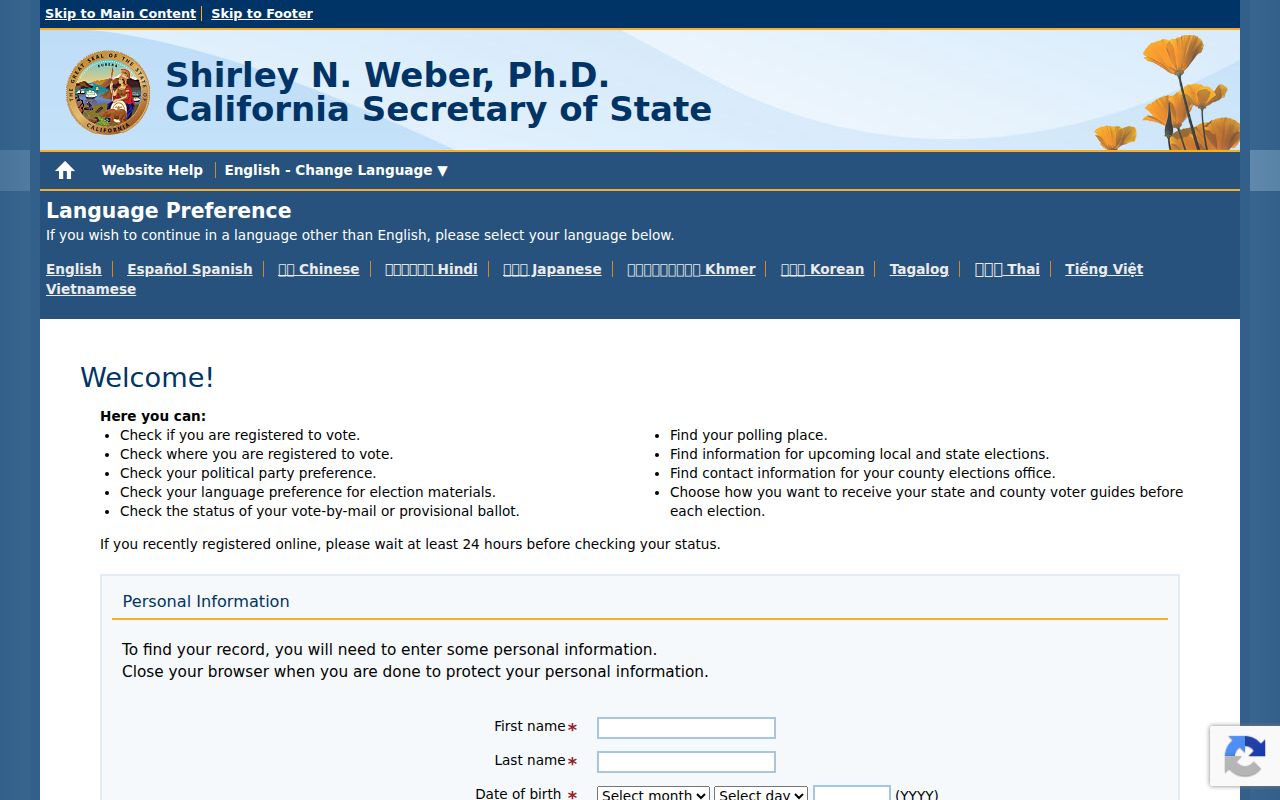
The California form is a self-check, nothing more. A broader Monterey voter-file request requires an application, identification, intended use, geographic scope, security details, and a permitted purpose under Elections Code section 2194.
Turn a Salinas Address Into an APN
An address means little to a name search. Geography comes first. Open the Monterey County Parcel Report App, type the complete address into Find address or place, and choose the matching result. Copy the Assessor's Parcel Number. Then run that number through the assessor's Fee Parcel or Assessment search. The map accepts APN and APN_FORMAT as well, though its text suggestions stop at six, so an exact address or parcel key beats a loose query.
The APN is the hinge. It links the map to the assessment roll, the legal description in a deed, a parcel report, and a city permit file. Any Salinas residents directory built from an address leans on that bridge. It does not make everyone tied to a parcel an occupant. The assessed owner may be a trust, an entity, a co-owner, or someone who receives mail elsewhere. A different mailing address hints at a non-occupying owner, and an owner-occupancy exemption is only supporting evidence.
Follow the chain in order. Address to parcel map, parcel map to APN, APN to assessor result, current owner to recorder grantee search, prior seller to the next deed. Check the legal description, recording date, and document number at each step. A street name is not a title chain. Only the lot, block, tract, map book, and page control it. Skip those details and the deed trail goes cold.
Need a wider address set? Pan the GIS map and use its selection tools. One street text query will not return every parcel. The full parcel-by-street walkthrough sits on the street directory page, and the home rule stays simple: Monterey's public Internet assessment search is APN-first.
Salinas Property Inquiry Fields
The county's online Property Inquiry is sharper than its plain title implies. It is not an unrestricted owner-name or street-address lookup. Pick the search key, enter the parcel or assessment number, and read the result tabs. California Government Code section 6254.21 explains why Monterey describes the Internet roll as unavailable. Owner-name and address searching are left out. No APN in hand? Use the parcel map or an assessor counter request instead.
| Field | Type | Required | What the search accepts |
|---|---|---|---|
| Search By | Dropdown | Yes | Fee Parcel Number or Assessment |
| Parcel or Assessment number | Text | Yes | Twelve digits, or a partial value with a six-digit minimum; no spaces or punctuation |
| Property Information | Result tab | No | Ownership, parcel status, property address, and map context where available |
| Roll Value | Result tab | No | Tax-rate area, assessed values, exemptions, and parcel characteristics |
| Value Notice | Printable result | When applicable | Proposition 8 assessment notice |
Assessor characteristics exist for assessment purposes and are not updated continuously. A screen print costs $2 under the 2026 fee schedule. A residential property-characteristics report is listed at $24. Counter service at 168 West Alisal Street is the practical fallback when a web result omits mailing information. It also helps when the parcel needs human review.
- Parcel
- A mapped unit of land identified by an APN for assessment and geographic work.
- Situs address
- The physical location of the parcel, distinct from a mailing destination.
- Legal description
- The lot, block, tract, map, or other wording used to identify land in a recorded instrument.
- Index
- A finding aid that points to a record; it is not always the record image or a certified copy.
Current Salinas Resident Directory Sources
Current directory work is matching work. Each Salinas residents directory source earns its place for one purpose. Property records are strongest for an assessed owner. A deed is strongest for a recorded party and a conveyance. A court search is strongest for a dated case event. A state license or business filing shows an affiliation. A voter status result belongs to the voter who authenticates.
| Source | Useful evidence | Keeper | Access boundary |
|---|---|---|---|
| Parcel and assessment record | Assessed owner, situs, values, exemptions, parcel status | Monterey County Assessor | APN or assessment search; fuller products at the counter |
| Recorded-document index | Grantor, grantee, instrument type, date, number, legal description | Monterey County Recorder | 1978 to present current index; 1850 to 1977 historical index |
| Court case index | Party, case number, filing date, type, and status | Monterey Superior Court | Public portal, courthouse computers, mail or counter copies |
| Business or license record | Entity, agent, officer, license status, dates, discipline where public | California SOS or DCA | Affiliation or professional record, not residence proof |
| Historical directory | Householder, spouse notation, occupation, address, school or newspaper link | John Steinbeck Library | Reference desk, Local History, Business Reference, and microform |
Names pile up quickly. The Salinas resident lookup page keeps the court, vital, license, business, and historical verification paths together for a one-person question.
Monterey Court Party Searches
The Monterey Superior Court public portal offers several modes. These include Case, Party, Business, Filing Date, and Criminal Advanced. Party search runs on a first and last name. Filing-date search adds a date range and a courthouse. Criminal Advanced accepts a name with date of birth. It also takes a DA number, or a report or booking number paired with a date. Results show the case number, case name, filing date, type, and status. Any match still calls for a look at party role and case detail.
Case record. Case number, name, filing date, case type, and status. Party search. First and last name lead to the same result columns plus a case-detail link.
Criminal advanced. Name plus date of birth. Or a DA number, or a report and booking number with a date. Copy fallback. Form CR-109 asks for requester contact, case caption, document description, certification, and delivery details.
The advanced search helps separate namesakes. Public courthouse computers and nonelectronic indexes remain open under the court's access instructions. Form CR-109 lists $15 for a name or a search over ten minutes. Pages run $0.50 each. Certification costs $40, and off-site retrieval costs $10. A check may be marked "Not to exceed $75.00" when the total is unknown, per the court.
The portal screen is a finding aid, not a full case file.
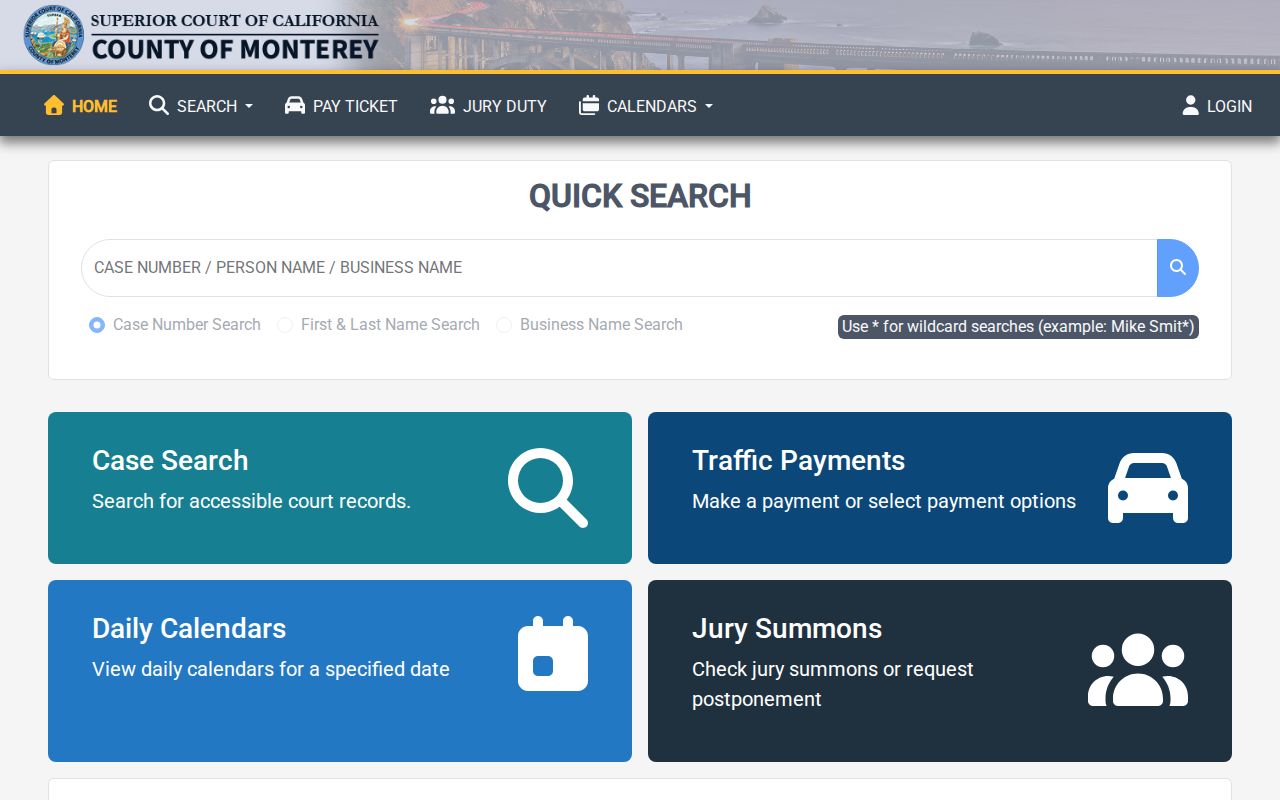
Some court material stays off the public trail. Sealed, juvenile, adoption, and confidential family records are closed, and a booking or charge needs a court disposition before it counts as a case outcome.
Salinas Vital Records: Index or Proof?
A Salinas residents directory lookup often starts with a life event. Vital records are where that trail begins. An index entry and a certified certificate are two different things. The Monterey Recorder-Clerk issues county birth, death, and non-confidential marriage certificates. The Health Department handles recent births and deaths plus burial permits. For a statewide channel, California Department of Public Health Vital Records is the other route. Meanwhile, a historical index, obituary, cemetery transcription, or newspaper abstract can locate an event. It never yields a certified document.
California Health and Safety Code sections 103525 and 103526 split certified copies into authorized and informational versions. An authorized copy proves identity. But only a requester with an allowed relationship or court authorization may receive one. A mailed authorized request also needs a notarized sworn statement. Confidential marriage copies follow their own rules under Family Code section 509. And California applies no simple rule that ordinary certificates open after a fixed span of years.
Did a Salinas event occur? Library indexes, newspaper abstracts, cemetery records, or the issuing office can supply evidence. Evidence alone does not prove identity. Who may receive a certificate? The County Recorder-Clerk and CDPH applications govern that, with relationship, declaration, payment, and notary rules attached. What happened in a divorce? The Monterey Superior Court holds the file and decree. A CDPH certificate of record is not the decree.
Fees shift, so confirm with the issuing office before sending payment. The 2026 county schedule lists birth certificates at $31. Death certificates are $26. Marriage certificates are $19.
The John Steinbeck Library's People Indexes
For a Salinas residents directory search with historical depth, the John Steinbeck Library holds the strongest shelf in town. Its Local History and Business Reference collections live mostly in-library or on microform. Call the Reference Desk before you drive over. The library sits at 350 Lincoln Avenue, Salinas, California 93901, and its phone is (831) 758-7311. To confirm a title, call number, or physical format, the library's Directories and Census inventory is the place to start.
The documented run of directories opens with L. L. McKenney's 1884 Coast County City Directory and an 1889 Monterey County adult-resident directory. Polk editions then carry the story forward. Salinas and regional volumes appear in 1926, 1928, 1930, 1933, 1937, 1939, 1941, 1946, 1949, 1952, and 1953 through 1959, plus a 1969 volume and Salinas Valley issues from 1971 into the 1990s. Beyond city directories, Great Registers, census microfilm, yearbooks, newspaper abstracts, hospital admissions, cemetery transcriptions, and the California Death Index widen the resident record considerably.
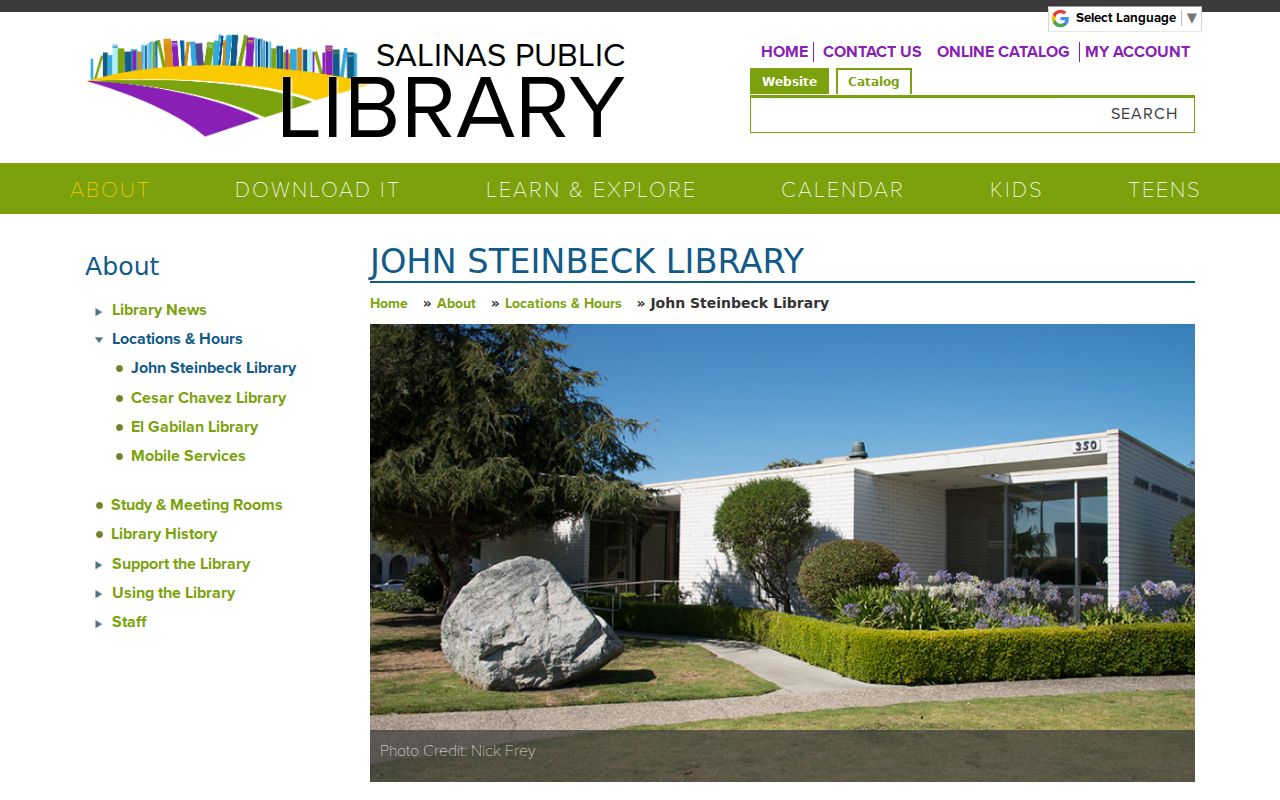
The John Steinbeck Library collection page shows the local-history entry point.
Ask the staff which Polk edition carries a reverse or criss-cross street section. The catalog lists the volumes. It does not promise an address-first section in every year, so confirm the year you need before you plan a visit. Great Register microfilm for 1900 through 1944 sits on three identified reels. The 1890 surname edition helps bridge the gap left by the mostly destroyed federal census.
- Criss-cross directory
- An address-first or street section that can identify a listed householder, then send the researcher back to an alphabetic entry.
- Great Register
- A historical voter register that can add locality and identity detail for its year, not a modern open voter roster.
- Microform
- A film copy of a printed or archival source that is read with library equipment.
- Index
- A name or event finding aid that points to a source and may not contain the full record.
Salinas Heir Trails From Public Records
Every Salinas heir search should start with a dated death clue. It should never begin with an unverified current address. Library newspaper abstracts can anchor the person. So can the California Death Index for 1940 through 1988, cemetery transcriptions, and a county death certificate. From there the Monterey court portal and probate records may surface a decedent, petition, estate, or interested person. A deed chain can show how land passed down. The California State Controller's unclaimed-property search adds a separate name and holder clue. It comes with its own claim process.
When a modern index runs thin, the Monterey County Historical Society's archival vault is another bridge. Its holdings include early assessment rolls and grantor records. There are also Great Registers, poll lists, judgments, dockets, and jail registers. Marriages, probate bonds and wills, lot books, maps, diaries, and club records round out the collection. The society reports more than 5,000 photographs and 2,500 negatives. Research happens by appointment only. So the vault is a custodian-led path rather than a walk-in residents directory.
Preserve the relationship named in each source. An heir, petitioner, grantee, trustee, or executor is not automatically the current resident of a Salinas parcel. Probate and deed records work best when paired with a legal description and a date.
The California unclaimed-property index may answer a different public question.
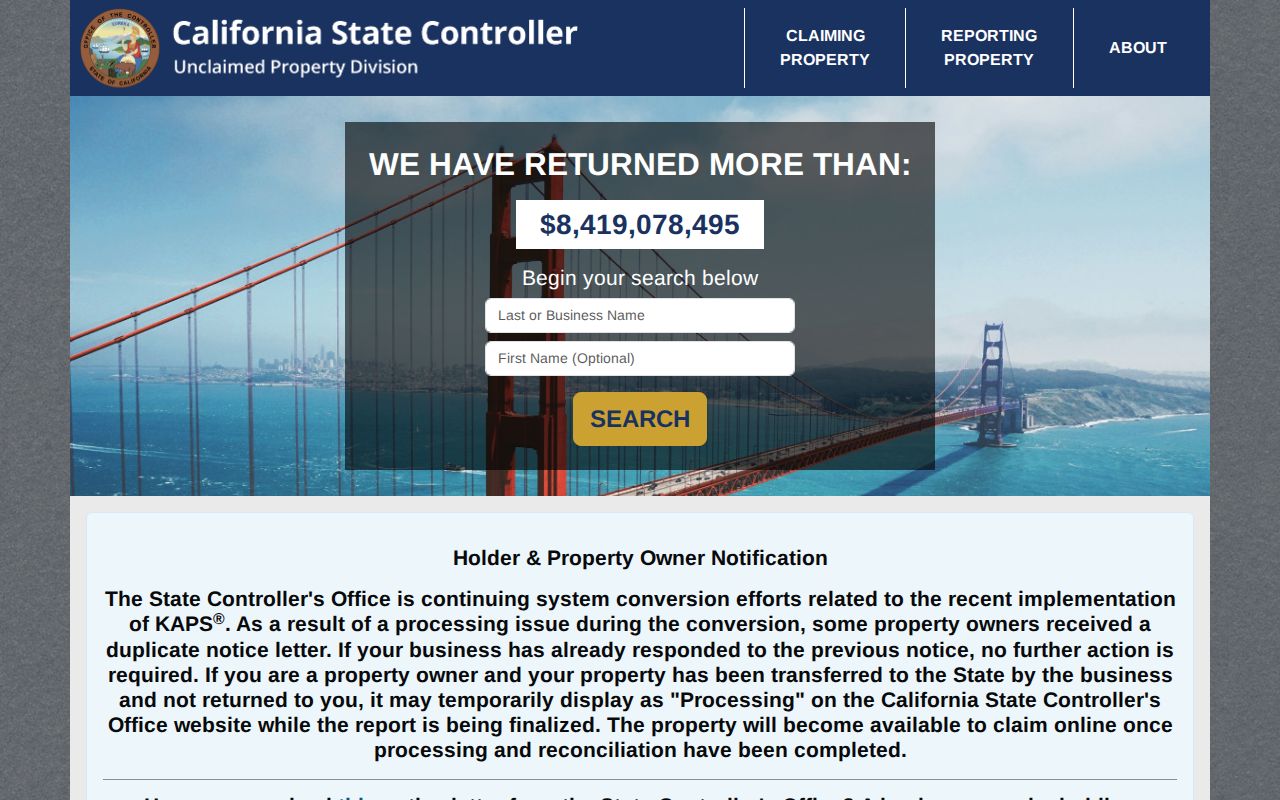
A name match in the unclaimed-property index is a lead for a claim. It proves neither kinship nor current residence, so follow the Controller's instructions and the underlying custodian records.
Salinas Business and License Records
Some Salinas resident searches are really affiliation searches. California bizfile Online shows an entity name or number, status, addresses, agent, officers, managers, and filings. Monterey County fictitious-business-name filings tie a trade name to a registrant and business address. The Department of Consumer Affairs search adds board, license type, name, number, city or county, status, dates, and public discipline. Together these sources can locate a professional or business contact. None of them claims a business address is a home.
The official California professional-license search is a useful first stop for a dated license record.
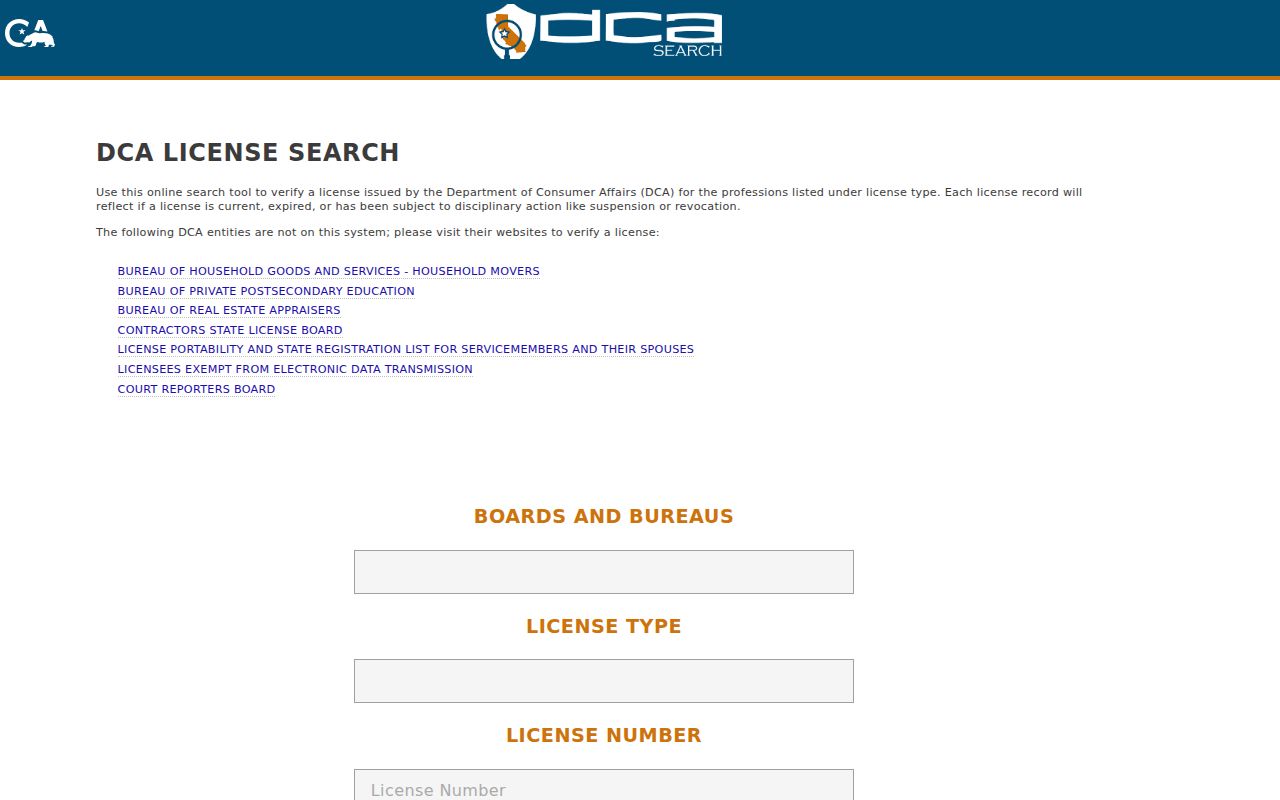
The result shows a license relationship and its public status. It settles no namesake question. It gives no home address and no present location.
California's business entity search provides a different kind of affiliation record.
Compare filing dates, agent roles, and business addresses. An agent may be counsel, a service company, or a mailing contact. Read the filing itself instead of treating every name on it as an owner or resident.
Safety Registries and Salinas Record Limits
Safety registries answer to their own rules. California's Megan's Law site supports name, address, and map searches under Penal Code section 290.46, and it posts warnings against unlawful use. The state registry's search surface is clear. For custody questions, the Monterey County Sheriff inmate search and the state CDCR locator are the right tools. Neither one serves as a general resident list. A booking is not a conviction, and any court disposition must be checked separately.
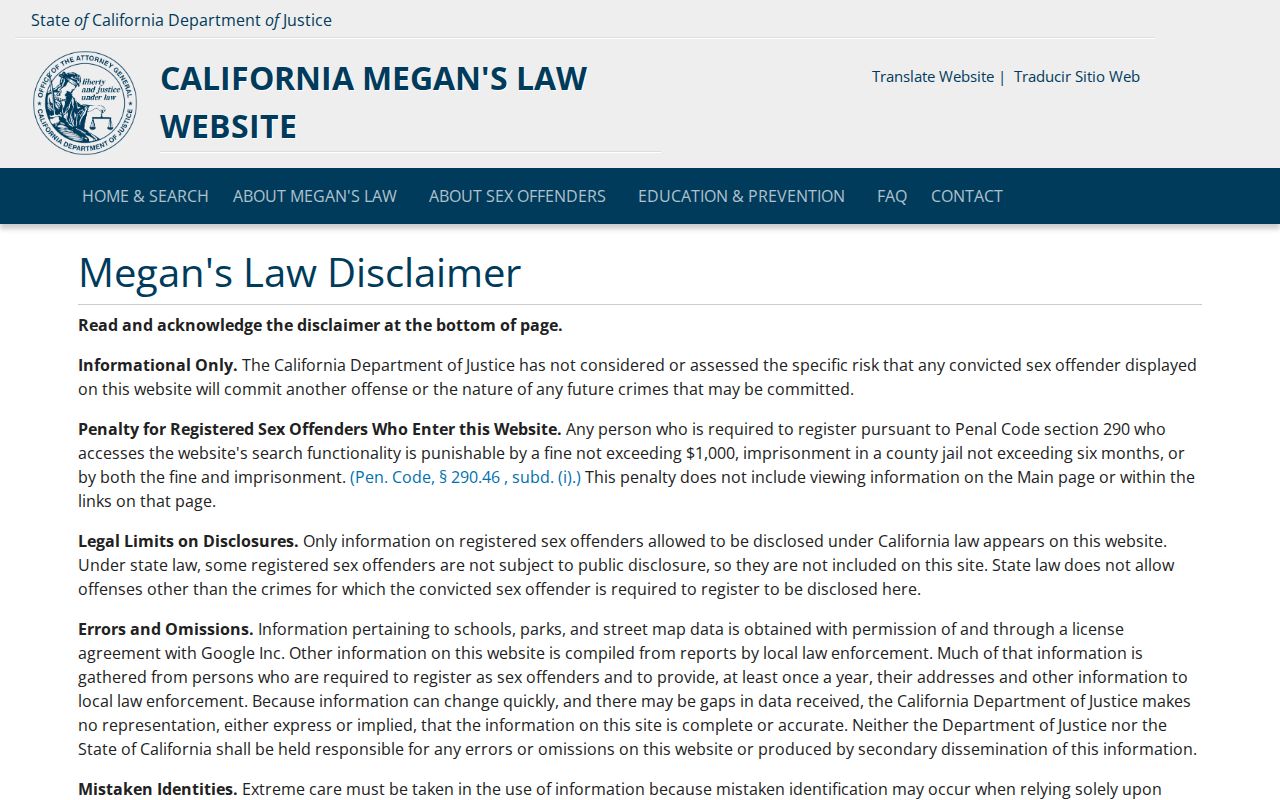
A registry has one lawful purpose. Use it that way, and never publish a person's location, contact details, or record in a manner that invites unwanted contact or harm.
Lawful personal use. Public records can support family history, estate work, civic research, or a careful effort to reconnect. Never use a Salinas resident record to stalk, harass, threaten, impersonate, or defeat a confidentiality protection.
Historical Salinas Resident Directories
Old resident directories preserve a larger Salinas. Any Salinas residents directory reaching backward must weigh McKenney's 1884 volume, the 1889 adult-resident directory, and the intermittent Polk run through 1997. The Polk volumes crossed rural routes and valley communities. An entry can supply a householder, a spouse notation, an occupation, or an address. That proves only the publication date. No directory proves a person stayed put between issues.
Annexations reshaped the record geography. First came 52 acres along Romie Lane in 1933. Forty-three additions from 1950 through 1956 doubled the city's area. Alisal joined in 1963, nearly doubling the population to about 50,000. A family on a rural route or in Alisal can later carry a different city label without a move. Pair directories with maps, deeds, census, newspapers, parcels.
The full Salinas city directory collections page follows the library shelf, entry conventions, and the household tracing method in detail.
Salinas Privacy Boundaries and Fallbacks
Some gaps in a Salinas record trail are deliberate. Safe at Home can provide a substitute mailing address for eligible survivors. It also serves certain reproductive-health participants. Confidential voter registration is another wall. So are sealed court files and adoption records. Protected DMV information, utility data, and unlisted household members belong there too. None of that belongs in a resident directory. And a missing name is not proof that a person left the community.
When an online index stops, the fallbacks are physical. A recorder counter terminal or bound book serves deed research. An assessor screen print or report covers parcels. A courthouse public computer, a library reference appointment, or the Historical Society vault can carry the trail further. A focused CPRA request works when those channels run out. It should name the record, the date range, the address or parcel, and the preferred format. A custodian may redact exempt material or say that no responsive record exists.
The Secretary of State program runs Safe at Home. Respecting it is part of accurate research. A good Salinas residents directory trail ends where the law and the record custodian say it ends.